Start with the reel strip
Every slot — mechanical or digital — is built on reel strips: fixed, ordered lists of symbols. A classic machine had physical hoops of painted symbols; a digital one has the same thing as a list in memory. Our own Gridrunner Reels uses three strips of 20 symbols each, and we publish the exact mix beside the game.
When you spin, the machine picks one stop on each strip at random. That's the entire event. Everything you see afterwards — the spinning, the deceleration, the little bounce — is theatre layered over a decision that took a microsecond.
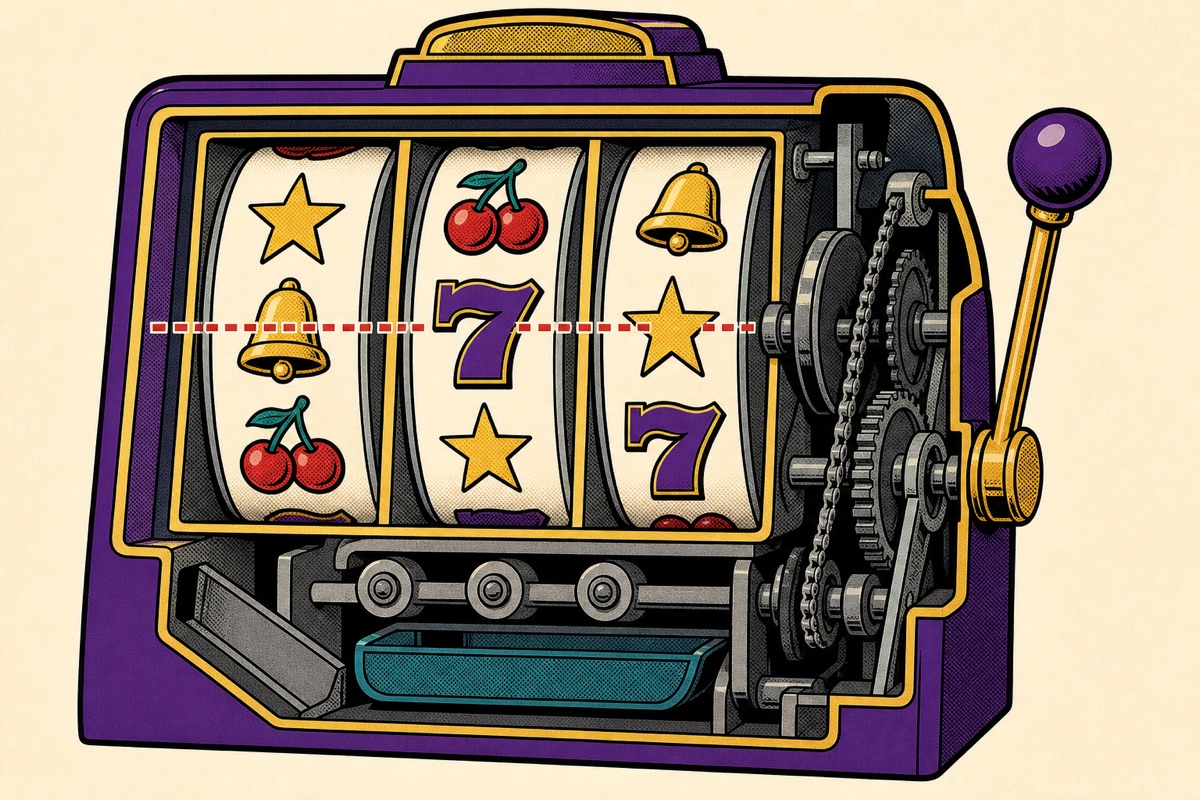
Paylines: where wins are read
A payline is the path across the window that the machine reads for matches. One line through the middle is the classic setup. Modern video slots read many paths at once — our Runes of the North reads ten, including zigzags and V-shapes.
More lines does not mean better odds. Each line carries a slice of your bet, so ten lines mostly means smaller, more frequent wins: the arithmetic underneath stays the same. It changes the texture of the game, not its generosity.
Wilds, scatters and why they exist
- A wild substitutes for other paying symbols, patching almost-complete lines. It makes wins feel closer together without changing the printed paytable.
- A scatter pays based on how many appear anywhere on screen, ignoring lines entirely. It's the designer's way of making every position matter.
The RNG, and why spins have no memory
Digital slots decide outcomes with a random number generator — a stream of numbers with no pattern. Each spin takes fresh numbers, so the result owes nothing to the spin before it. A slot that just paid is not "hot", and one that hasn't paid all evening is not "due". The machine doesn't know what an evening is.
Our games use the cryptographic random source built into your browser, the same class of generator used for secure connections. Every spin is drawn independently, and we never adjust a result after the fact — no scripted near-misses, no streak-breaking, no mercy wins.
Return to player (RTP), honestly
RTP is the share of everything bet that a game pays back over a very long run. Gridrunner Reels returns 93.59% — a number we can state exactly because the game is small enough to enumerate every one of its 8,000 outcomes. Runes of the North returned 92.8% across four million simulated spins.
The catch, and it's a big one: RTP describes millions of rounds. A hundred spins can double your balance or halve it without the machine being anything other than fair. RTP is a property of the long run, and nobody plays the long run in one sitting.
Volatility: the shape of the ride
Two games with identical RTP can feel wildly different. A low-volatility game pays small and often; a high-volatility game pays rarely but bigger. Classic three-reelers like Gridrunner sit on the spiky end — most spins lose, and the 500× top prize does a lot of the paying. Ten-line games like Runes smooth the ride out with frequent small hits.
Neither is better. It's a taste question, like choosing between a rowboat and a rollercoaster.
Why we tell you all this
Real casinos rarely put reel strips and hit rates next to the spin button. We can, because we have nothing to sell — coins here are free and worthless, so the only thing left to offer is a fair machine and a clear explanation. If a claim on this page doesn't match what you see in the games, tell us.